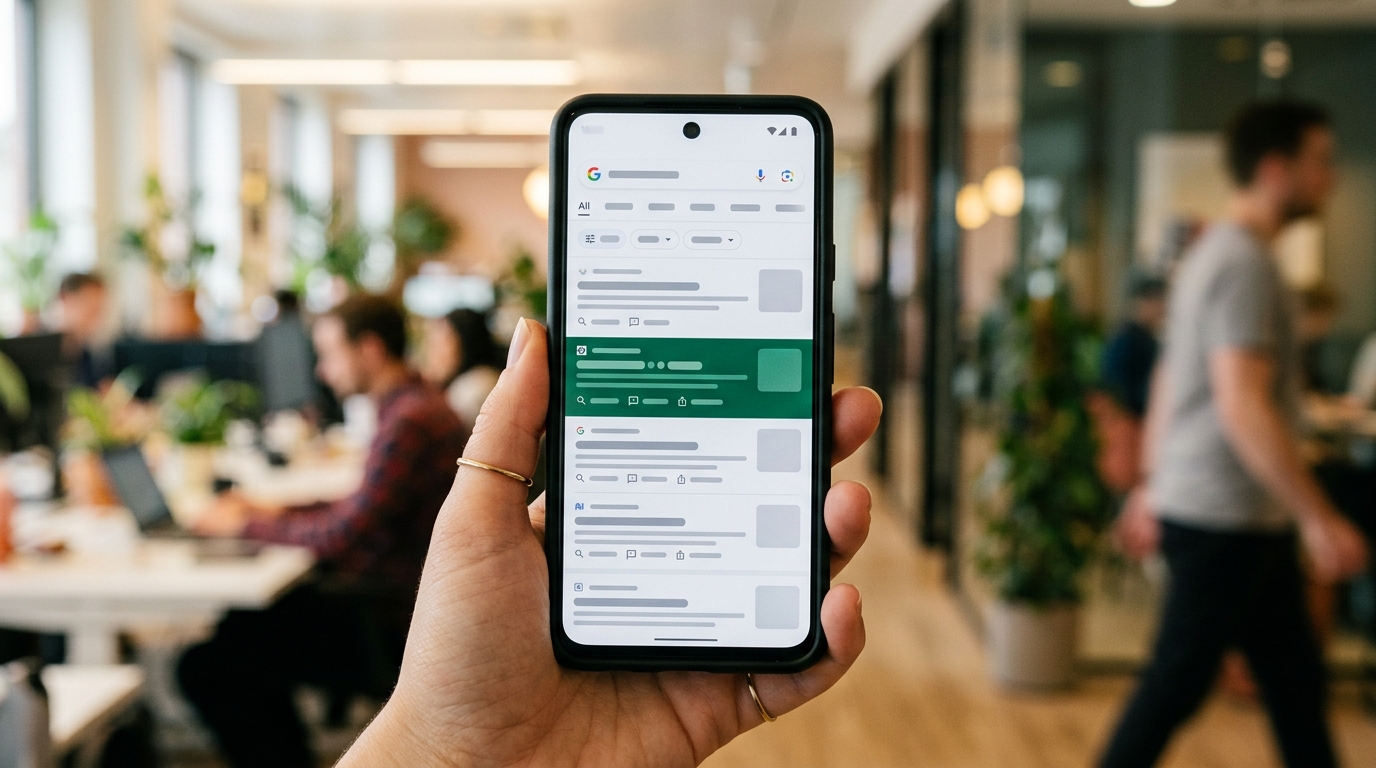
A growing share of your future customers will never see your homepage before they decide whether to buy from you. They'll ask ChatGPT "what's the best accounting software for a five-person agency," ask Perplexity "which dentist near me takes walk-ins," or read the AI Overview at the top of Google, and they'll get one synthesized answer with a handful of brands and sources in it.
If your business is in that answer, you're on the shortlist. If it isn't, you never got a chance.
Generative engine optimization (GEO) is the practice of making your brand and content show up, accurately and favorably, in AI-generated answers. It builds on SEO, and adds a focus on quotable answers, evidence, brand mentions across the web, and consistent facts.
This guide answers the 11 questions teams ask most about GEO: what it is, where it came from, how generative engines pick their sources, how it differs from SEO, and a step-by-step playbook you can start on this week. Use the question list to jump straight to yours.
Question 01What is generative engine optimization?
Generative engine optimization is the process of improving how often, and how well, a brand, product, or piece of content is mentioned and cited in responses from generative AI systems, such as ChatGPT, Google AI Overviews and AI Mode, Perplexity, Gemini, Claude, and Microsoft Copilot.
You'll also see it called generative AI engine optimization, AI search optimization, LLM optimization (LLMO), or AI visibility. They all describe the same goal: when an AI assistant answers a question in your category, you want to be part of the answer. (For how all the acronyms fit together, see GEO vs SEO vs AEO vs AIO.)
Where did the term come from?
The term was coined in a 2023 research paper, GEO: Generative Engine Optimization, by researchers from Princeton University, IIT Delhi, and collaborators (later published at KDD 2024). The authors built a benchmark of 10,000 queries and tested how different content edits changed a source's visibility inside AI-generated answers.
Their headline findings are still the most useful starting point for anyone doing GEO:
- Adding citations, quotations from relevant sources, and statistics boosted source visibility by over 40% across a range of queries.
- The methods were also tested on Perplexity.ai, a real-world generative engine, with visibility improvements of up to 37%.
- Keyword stuffing, the oldest trick in SEO, did not reliably help, and in some tests hurt.
- What worked varied by domain. For example, adding statistics helped more for some topics, while authoritative quotations helped more for others.
The lesson: generative engines reward content that is easy to verify and easy to quote, not content that repeats a phrase.
Question 02Why does generative engine optimization matter now?
GEO isn't a speculative trend anymore. The audience is already there:
Semrush also projected that AI search traffic could overtake traditional organic search by 2028.
Put together: fewer people click through, but the ones who do arrive pre-sold, because an AI already explained why you fit. And for everyone who doesn't click, the AI's answer is the impression. GEO is how you get into that impression.
Question 03How is GEO different from SEO and AEO?
These terms overlap, and that confuses a lot of teams. Here's the practical difference:
| Traditional SEO | AEO (Answer Engine Optimization) | GEO (Generative Engine Optimization) | |
|---|---|---|---|
| Goal | Rank pages in a list of blue links | Win featured snippets, voice answers, "People also ask" | Get mentioned and cited inside AI-generated answers |
| Where it shows up | Google/Bing results pages | Snippets, voice assistants | ChatGPT, Perplexity, Gemini, Claude, Copilot, Google AI Overviews and AI Mode |
| Unit of success | A ranking position, a click | A quoted answer box | A brand mention, a citation, a recommendation |
| Core signals | Relevance, links, technical health | Clear Q&A formatting | Crawlability, extractable facts, authority, third-party mentions, consistency |
| How you measure | Rankings, CTR, organic sessions | Snippet ownership | Share of AI answers, citation rate, sentiment, AI referral traffic |
The important point is that GEO is built on top of SEO, not instead of it. Google says plainly in its guidance on AI features that there is nothing special creators need to do to appear in AI Overviews or AI Mode beyond following its regular Search Essentials. Many other AI assistants also retrieve live web results before they answer. If search engines can't crawl, index, and trust your pages, AI engines usually can't either.
What GEO adds is a shift in focus: from "rank this URL" to "make sure the AI understands, trusts, and repeats what's true about my brand."
Question 04How do generative engines choose what to cite?
You don't need to understand transformer math to do GEO well, but you do need a working mental model. Most AI answers that cite sources are produced roughly like this:
- Query understanding and fan-outThe engine interprets the question and often breaks it into several sub-queries (Google calls this "query fan-out" in AI Mode). A question like "best CRM for a small real estate team" might quietly become searches about pricing, integrations, reviews, and mobile apps.
- RetrievalThe engine pulls candidate pages from a search index (Google's, Bing's, or its own crawler's).
- SelectionIt picks the passages that most directly and credibly answer each sub-question.
- SynthesisThe model writes an answer, blending retrieved passages with what it already "knows" from training data.
- AttributionIt attaches citations to some of the claims, and names some brands as recommendations.
That gives you two levers:
Can the engine find, access, and extract a clean answer from your pages right now? This is where technical SEO, crawler access, structure, and freshness matter.
Does the model already associate your brand with the category? This is driven by how often, and how consistently, your brand is discussed across the web.
On the second lever, Ahrefs studied 75,000 brands and found that branded web mentions had the strongest correlation with appearing in AI Overviews (0.664), well ahead of backlinks (0.218). Good GEO works both levers at once.
Question 05Which GEO tactics actually move AI visibility?
Ten tactics, roughly in the order most businesses should tackle them. The first four are mostly about the retrieval lever; the rest build the familiarity lever over time.
01Make sure AI crawlers can actually reach you
This is the most common, most fixable GEO problem. Check:
- robots.txt. Each AI company runs its own crawlers. OpenAI, for example, documents separate bots:
OAI-SearchBotsurfaces sites in ChatGPT search, whileGPTBotcollects training data. Sites that blockOAI-SearchBotwon't be shown in ChatGPT search answers. You can allow search bots while blocking training bots if that's your policy. - CDN and firewall rules. Some bot-protection settings block AI crawlers by default. Check your Cloudflare (or similar) configuration.
- JavaScript rendering. Many AI crawlers don't render JavaScript the way Googlebot does. If your key content, prices, or product details only appear after client-side scripts run, serve them in the initial HTML.
- Indexing in Google and Bing. Several AI assistants rely on these indexes. Submit your sitemap to both Google Search Console and Bing Webmaster Tools.
02Lead with the answer
Generative engines extract passages, not whole pages. Write so that each important question gets a direct, self-contained answer in the first sentence or two under a clear heading, and then add depth. Instead of three paragraphs of context before the point, try:
How much does a commercial roof inspection cost? Most commercial roof inspections cost between $X and $Y, depending on roof size, material, and whether drone imaging is included.
A model can lift that sentence cleanly. It can't lift a point that's spread across five paragraphs.
03Add statistics, sources, and quotations
This is the tactic with the strongest evidence behind it, straight from the original GEO research. Concretely:
- Replace vague claims ("most customers save time") with specific numbers ("customers cut onboarding from 14 days to 5").
- Link to primary sources for facts you cite.
- Include short, attributable quotes from named experts, including your own team members with real credentials.
- Publish original data when you can: survey results, benchmarks, pricing indexes, case-study numbers. Original data is the kind of thing other sites cite, which in turn increases your brand mentions.
04Structure content for extraction
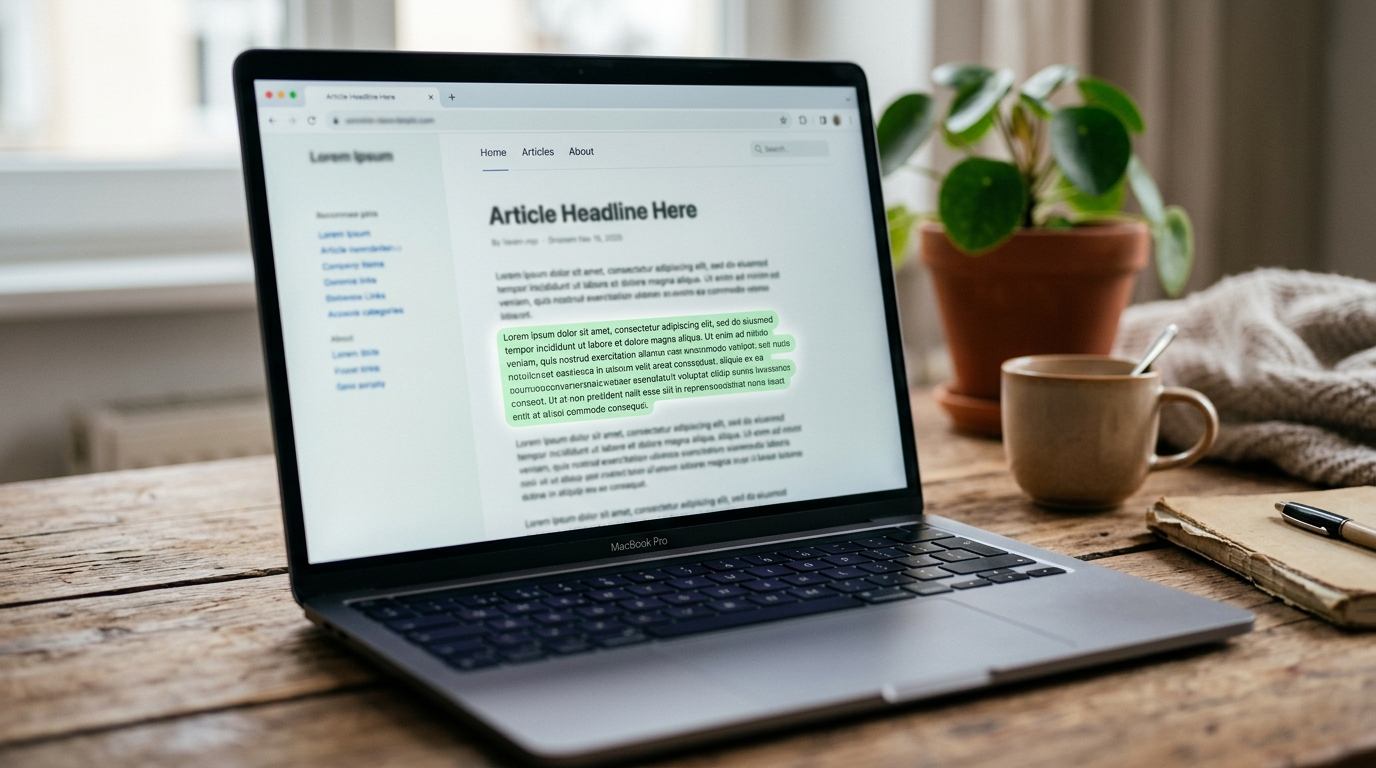
Make every page easy to parse:
- One clear H1, descriptive H2/H3 headings phrased the way people ask questions.
- Short paragraphs, bulleted lists for steps and features, tables for comparisons and pricing.
- An FAQ section on pages where real questions come up.
- A visible "last updated" date on content that changes.
Structured data (schema markup) such as Organization, Product, LocalBusiness, FAQPage, and Article won't guarantee AI citations, but it makes your facts unambiguous to machines and supports your regular search visibility. Make sure the markup matches what's visible on the page.
05Build topical depth, not one-off pages
Query fan-out means an AI engine looks at a topic from many angles. A single "ultimate guide" rarely covers all of them. Build clusters: a core page plus supporting pages for pricing, comparisons, use cases, integrations, troubleshooting, and "best X for Y" questions. The more of the fan-out you answer well, the more chances you have to be retrieved.
06Write for conversational, long-tail prompts
People type 3-word keywords into Google, but they write full sentences to ChatGPT: "I run a 12-table restaurant in Austin and need a POS that handles online ordering, what should I look at?"
Gather the real questions your customers ask in sales calls, support tickets, reviews, and Reddit threads, then create content that answers them in that language, with the specifics (industry, size, location, budget) that make a recommendation fit.
07Earn mentions where AI engines look
Because brand mentions correlate so strongly with AI visibility, off-site work is a big part of GEO:
- Reviews and directories: G2, Capterra, Trustpilot, Google Business Profile, Yelp, and the industry directories in your niche.
- Community discussions: Reddit, Quora, and niche forums are frequently cited by AI engines. Participate genuinely; spam gets noticed and backfires.
- Comparison and "best of" lists: Find the listicles AI engines cite for your category and pitch your inclusion with real differentiators.
- Digital PR and expert commentary: Quotes in trade publications and news stories create the kind of authoritative mentions models learn from.
- Video and podcasts: YouTube transcripts are indexed and cited by several engines.
For a ChatGPT-specific take on this, see How to Get Cited by ChatGPT.
08Keep your brand facts consistent everywhere
If your website says you serve "all of Texas," your Google Business Profile says "Dallas only," and a 2022 directory listing shows an old phone number, an AI engine has to guess, and it may guess wrong or leave you out.
Audit the core facts: name, description, category, locations, service areas, pricing model, founders, and key features. Make them match across your site, social profiles, directories, Wikipedia/Wikidata (if applicable), and press pages.
09Strengthen E-E-A-T signals
AI engines lean on sources that look trustworthy. Show it:
- Real author bylines with bios and credentials.
- Clear "About," contact, and policy pages.
- Case studies with named clients (with permission) and real results.
- Citations to reputable sources, and corrections when you get something wrong.
10Refresh what matters
AI answers about pricing, "best tools," and fast-changing topics skew toward current information. Review your highest-value pages on a schedule: update numbers, add new questions, remove outdated claims, and change the visible updated date only when you've actually changed the content.
Question 06What should you not waste time on?
GEO attracts a lot of hype. A few things that are oversold:
- Keyword stuffing. The original GEO paper found it didn't reliably improve visibility in generative engines.
- Treating llms.txt as a ranking lever. The proposed
llms.txtfile may help some tools navigate a site, but Google's John Mueller has said it can't help LLMs decide which sites to surface, and Google has said it doesn't use it for Search. It's cheap to add, but don't expect it to change your AI visibility. - Mass-produced AI content. Publishing hundreds of thin, near-duplicate pages runs into Google's scaled content abuse policies and adds nothing an AI engine needs. One genuinely useful page beats fifty generic ones.
- Prompt "hacks" hidden in pages. Hidden text aimed at manipulating AI assistants is a manipulation tactic, carries real risk, and is increasingly filtered out.
- Chasing a single prompt. AI answers vary by phrasing, location, and session. Optimize for a topic and a set of prompts, not one screenshot.
Question 07How do you measure generative engine optimization?
GEO measurement is less mature than SEO measurement, but you can track meaningful signals today.
- 1Build a prompt set. List 30-100 realistic prompts across your category, such as "best [category] for [audience]," "[your brand] vs [competitor]," "how to [problem you solve]," and "[category] near [city]."
- 2Track these metrics across engines (ChatGPT, Perplexity, Gemini, Google AI Overviews/AI Mode, Copilot, Claude):
| Metric | What it tells you |
|---|---|
| Mention rate / share of voice | How often your brand appears in answers vs. competitors |
| Citation rate | How often your own pages are linked as sources |
| Position and prominence | Whether you're the first recommendation or a footnote |
| Sentiment and accuracy | Whether the AI describes you correctly and favorably |
| Cited sources | Which third-party pages the AI relies on for your category (your outreach target list) |
- 3Measure AI referral traffic. In GA4 (or your analytics tool), segment sessions from referrers like
chatgpt.com,perplexity.ai,gemini.google.com, andcopilot.microsoft.com. Track conversions from those sessions, not just visits. - 4Watch your server logs. Check how often AI crawlers (OAI-SearchBot, PerplexityBot, ClaudeBot, and others) hit your pages, and whether they get errors.
- 5Re-test monthly. Answers fluctuate. Look at trends over weeks and months, not day-to-day changes.
Question 08Which tools and teams can do GEO for you?
There are three broad ways to approach generative AI engine optimization, depending on your budget and how much work you want to do yourself.
AI visibility tracking tools
A fast-growing category of tools monitors how AI engines talk about your brand. Commonly used options include:
- Profound: dedicated AI visibility monitoring, popular with larger teams.
- Semrush AI Visibility Toolkit: AI visibility tracking inside the Semrush suite, convenient if you already use Semrush.
- Ahrefs Brand Radar: brand mention and AI visibility data alongside Ahrefs' SEO data.
- Peec AI and Otterly.AI: lighter-weight trackers focused on prompts, mentions, and citations.
These tools are good at showing you where you stand. You (or someone you hire) still have to do the fixes, writing, and outreach. We compare them in more depth in Best AI Search Visibility Tracking Tools.
Votrix: an AI marketing team that does the work (our product)
Disclosure: Votrix is our product. It's included here so you can see a different approach to GEO; weigh it against the other options.
Votrix gives you a team of AI marketing agents, AI employees that carry out real marketing work instead of only reporting on it. For GEO, the relevant team member is Riya, the SEO & GEO manager, whose work covers:
- SEO audits and issue fixing, including the technical foundations AI engines depend on
- Keyword planning and content built around the questions your customers actually ask
- GEO: visibility in AI assistants, so your business can show up in AI answers as well as Google results
 RiyaSEO & GEO Manager
 MayaBuilds & deploys websites
 RebeccaSocial content & publishing
 VictorProspecting & outreach
Riya works alongside the rest of the team: Maya builds and deploys websites, Rebecca manages social media content and publishing, and Victor handles lead prospecting, contact enrichment and outreach drafts that go out once you approve them. You direct them through chat, and they keep a persistent memory of your business.
On pricing, per the Votrix pricing page: all four AI team members are free to hire, there are no monthly fees or contracts, and you pay based on the outcomes they complete, such as SEO content written, pages deployed, or posts published.
Agencies and in-house teams
Many SEO agencies now offer GEO services, often bundling AI visibility audits, content, and digital PR. This can work well for larger budgets. Ask any agency how they measure AI visibility, which engines they track, and what they'll actually change on your site and off it.
Question 09What does a 30-day GEO starter plan look like?
If you want a concrete starting point:
Baseline
Write your prompt set, test it across 4-5 AI engines, and record mentions, citations, and accuracy. Set up AI referral tracking in analytics.
Foundations
Fix crawler access (robots.txt, CDN rules, JavaScript rendering), submit sitemaps to Google and Bing, and audit brand facts for consistency across your site and major profiles.
Content
Rewrite your top 5-10 pages to lead with answers, add statistics and sources, add FAQ sections, and fill the biggest gaps in your topic cluster.
Mentions
Identify the third-party pages AI engines cite for your category, then update your review and directory profiles, pitch inclusion on relevant lists, and join genuine community conversations.
Then re-test your prompt set and repeat monthly.
Question 10Frequently asked questions
Generative engine optimization (GEO) is making sure AI tools like ChatGPT, Perplexity, Gemini, and Google's AI Overviews mention and cite your business when people ask questions related to what you offer.
Yes. "Generative AI engine optimization," "AI search optimization," and "LLM optimization" are different names for the same practice.
No. GEO builds on SEO. Many AI engines retrieve content from search indexes, and Google says its AI features rely on the same Search Essentials as regular search. Strong technical SEO, quality content, and authority remain the foundation; GEO adds a focus on extractable answers, brand mentions, and consistency across the web.
Technical fixes, like unblocking an AI crawler, can show up in retrieval-based answers within days or weeks. Brand-level visibility, which depends on mentions across the web and eventually on model training data, typically takes months of consistent work.
Yes, and it can be a real opportunity. AI engines often answer specific, local, or niche questions where a well-documented small business can beat a big brand with generic content. Complete profiles, real reviews, clear service pages, and direct answers go a long way.
Ask it, systematically. Run a consistent set of prompts across engines every month and log the results, or use an AI visibility tracking tool to automate it. Also check your analytics for referral traffic from chatgpt.com and other AI domains.
Question 11So where do you start?
Search is becoming a conversation, and in a conversation, the AI decides which brands are worth mentioning. Generative engine optimization is how you give it good reasons to mention yours: be crawlable, answer questions directly, back claims with evidence, earn mentions from sources the AI trusts, and keep your facts consistent everywhere.
None of that is magic, but it is a lot of ongoing work. Whether you do it yourself, use tracking tools, hire an agency, or hand it to an AI team member like Riya on Votrix, the brands that start now will be the ones AI engines already know when your customers come asking.
Want Riya to run this playbook for you?
She audits your site, fixes what blocks AI crawlers, writes answer-first content and tracks where AI assistants mention you. Free to hire; you pay only for completed work.